OpenAI exec wants advertisers to ditch agencies and just prompt ChatGPT for ads
OpenAI monetization head envisions future where small businesses create campaigns through prompts instead of hiring performance marketers to run ChatGPT ads.


OpenAI monetization head envisions future where small businesses create campaigns through prompts instead of hiring performance marketers to run ChatGPT ads.
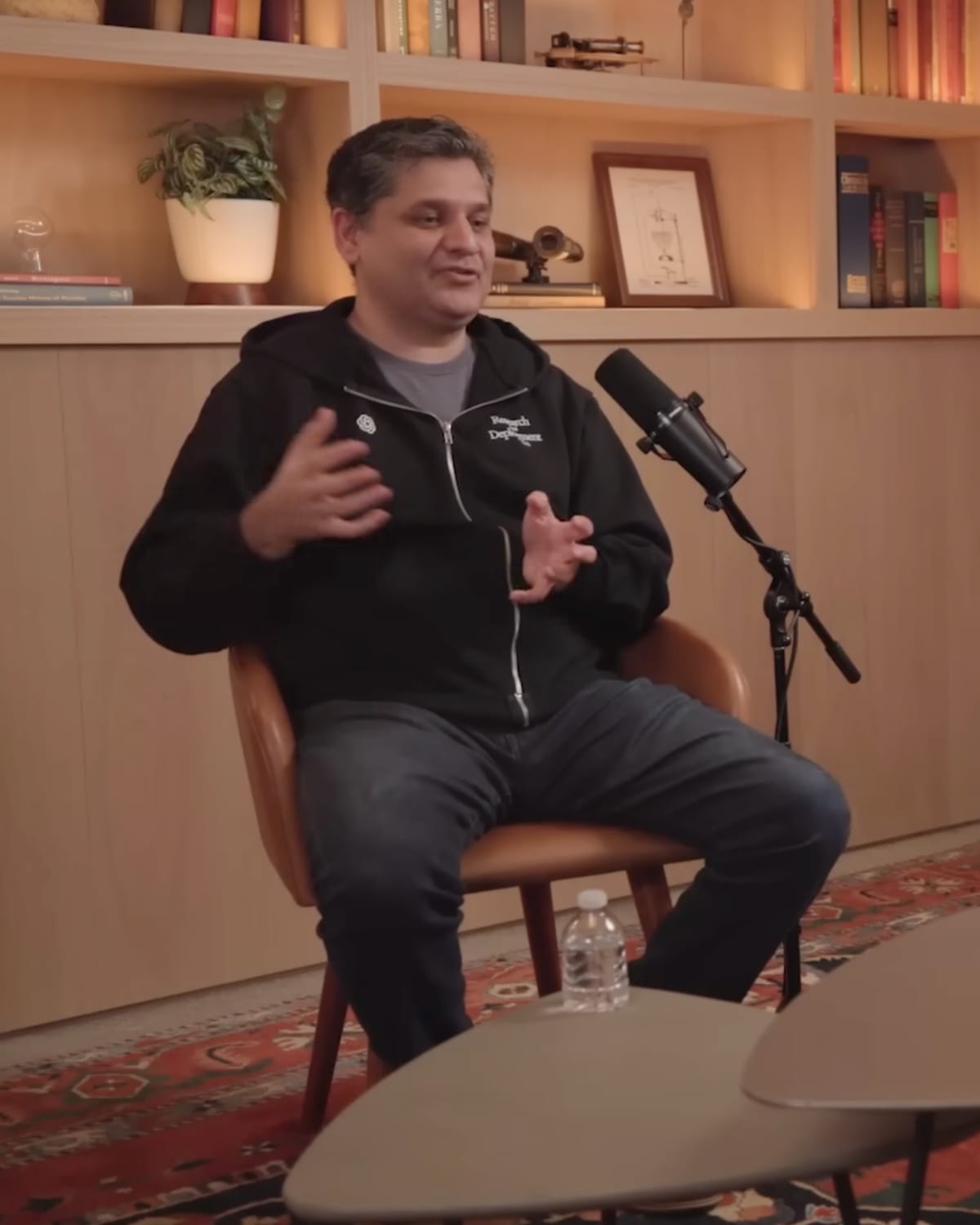
OpenAI this week outlined a vision for advertising automation where businesses would simply prompt ChatGPT to create and manage campaigns, eliminating the need for agencies or performance marketing specialists currently required to navigate complex advertising platforms.
Asad Awan, who leads monetization at OpenAI, detailed the company's longer-term ambitions during The Thinking Behind Ads in ChatGPT podcast published February 9, 2026. While the interview addressed OpenAI's advertising principles and implementation strategy, Awan's comments about eliminating advertising intermediaries sparked immediate pushback from agency professionals who questioned whether artificial intelligence could truly replace strategic marketing expertise.
The vision centers on conversational campaign management. According to Awan, advertisers would interact with ChatGPT the way they currently prompt the system for information. "I do think the vision has to be where almost as easy as you were prompting nowadays for questions. You could say my goal is sell these shoes more in Midwest and go," Awan stated during the podcast. "And then it comes back. It's like hey I tried some experiments and I think this is the right bid given your price point. This is the right way to doing that. Do you want to spend more money on this? And then you continue that conversation and almost become an agent for that."
This approach represents a fundamental departure from current advertising infrastructure. Agencies reported spending 46 hours monthly on manual campaign changes according to September 2025 research from Fluency, which surveyed 75 independent digital advertising agencies across the United States. The same study found that 64% of strategists manage multiple channels simultaneously, creating operational complexity that automated systems could theoretically address.
Awan positioned performance marketers as a cost burden rather than strategic partners. "But today literally a small business has to hire performance marketers which could be one of the biggest costs in some sense actually like you know just that cost of running ads through through that is actually one of the biggest costs in there," he stated. "Which of course then makes things more expensive. So I think the vision would be that it is as easy as just steering and telling what you need from your business. So describing the what but not having to think about how it will work and how many campaigns and how much dollars and everything else is like hey I want to spend this much I want to grow my business this much these are the constraints and ads are created and run to match your constraints in some sense."
The economics behind this vision reflect genuine pain points for resource-constrained businesses. Research published November 2025 found that 52% of surveyed small businesses operate on monthly marketing budgets below $1,000, while half report no employees dedicated solely to marketing functions. These resource constraints force businesses to prioritize low-cost tactics while limiting investment in paid advertising channels that require substantial minimum spending and specialized knowledge.
Awan used a personal anecdote to illustrate the complexity advertisers currently face. "I have a few friends who started this e-commerce company selling shoes and they did almost everything on their own like the founders which is like go to the factory get this done get the logistics done but when it came to ads they actually have to had to hire like three performance marketers to do the work because it's so so cumbersome so analytical if you don't do it right you could end up wasting a lot of money," he explained.
The advertising industry has pursued automation for years through different technological approaches. Amazon launched Ads Agent in November 2025, introducing natural language commands for campaign creation, targeting segment identification, and SQL query generation within Amazon Marketing Cloud. The platform addresses operational inefficiencies by automating time-consuming tasks while maintaining human approval requirements for campaign launches.
PubMatic introduced AgenticOS in January 2026, positioning it as the first operating system built specifically for autonomous advertising execution. Early testing demonstrated campaign setup time reductions of 87% and issue resolution improvements of 70%, according to the company's performance metrics. These systems automate coordination of advertising functions including planning, forecasting, pacing, yield management, and measurement.
The technical infrastructure to support prompt-based advertising already exists in nascent forms. The Ad Context Protocol launched October 15, 2025, introducing a unified interface for AI agents to manage campaigns across multiple platforms through standardized tasks covering product discovery, campaign creation, and performance optimization. The protocol uses JSON Schema validation for all data exchanges, reducing integration complexity through consistent validation rules across all protocol operations.
However, industry reaction to Awan's comments revealed deep skepticism about replacing human expertise with automated systems. Anthony Higman, responding to the podcast on X, wrote "Lol will work perfectly im sure!!!! LOL No chance that the ai tells the advertiser that the pre opted in settings are best for this! And they actually are not but are designed to drain their ad budget. That would NEVER happen! All big tech companies can be trusted entirely end to" The sarcastic response captured broader concerns about AI systems optimizing for platform revenue rather than advertiser success.
The competitive dynamics inform OpenAI's aggressive positioning. OpenAI began accepting advertisers for ChatGPT placements on February 6, 2026, according to advertising executives who spoke with the company. The test period offers sponsored placements at $60 per 1,000 views - a rate comparable to targeted streaming and premium television inventory, well above Meta's typical CPMs often under $20.
The pricing structure establishes ChatGPT as premium inventory requiring substantial minimum commitments. OpenAI set the minimum commitment at $200,000, according to reporting from AdExchanger in February 2026. Early participants include Target, Ford, Mrs. Myers, and Adobe, with major holding companies WPP Media, Omnicom, and Dentsu among confirmed partners.
Awan's vision extends beyond current campaign management to fully autonomous product discovery and purchasing. "I think a next step would be more actual conversational ads where you could truly kind of understand what this product is about. The next version would be can it work behind the scenes and actually aggregate the best discounts and best deals and the best version of the product," he stated during the podcast.
The example he provided illustrated autonomous agent behavior: "Like for example, if I know that I like ramen and let's say some somehow ChatGPT has understood that preference of mine, then it could find that for me. I didn't even know that that product exists. Then in behind the scenes, it could actually say, 'Oh, actually I found this vegan ramen. Maybe that's something that's valuable.'"
This agentic functionality would position ChatGPT as an intermediary between advertisers and consumers, with the platform making purchasing recommendations based on conversation history and stated preferences. According to Awan, "there is a marketplace where somebody could say, 'Hey, help people who are like this to discover because discovery goes from both directions, right? like of course I'm searching for something and then people want me to discover something and there's a match between those."
The technical implementation would require sophisticated intent recognition systems. A company spokesperson told AdExchanger in January 2026 that separate AI systems will evaluate whether conversations have commercial intent before surfacing relevant advertisements in ChatGPT responses. OpenAI maintains that ads will likely appear only after users show clear interest or purchase intent.
Historical precedents suggest caution about automation replacing specialized expertise. Research from July 2025 revealed that 72% of marketers reuse creative assets across social and connected television platforms, according to McKinsey analysis showing $1.1 billion in equity investment flowing into agentic AI during 2024. Job postings related to agentic artificial intelligence technology increased 985% from 2023 to 2024.
Yet Gartner predicted in June 2025 that over 40% of agentic AI projects will be canceled by the end of 2027 due to escalating costs, unclear business value, and inadequate risk controls. The research firm's January 2025 poll of 3,412 webinar attendees revealed uneven investment patterns, with 19% reporting significant investments in agentic systems while 42% made conservative investments.
The agency perspective highlights expertise requirements that pure automation cannot address. "As as as the competition on that increased, I think like the the people who had more time and money to spend on optimizing that and analyzing that data and then running the best possible ad got the benefit from that," Awan acknowledged during the podcast. He cited Allbirds as an example of strategic targeting success: "I gave an example of an actual brand which is all birds. It competed with really big brands on shoes, but somehow they found that every designer in the tech company is going to love my shoe and and finding that niche and then actually being able to create your creatives, your message to focus on that made them win in this."
This strategic insight - identifying that Silicon Valley designers represented a viable niche for comfortable footwear marketing - exemplifies the kind of human judgment that automated systems struggle to replicate. Awan admitted "that I think is not accessible to everyone. If you are very analytical and you have a whole team of people who think about that, you could do that."
The democratization argument carries weight for certain business segments. Platform complexity creates genuine barriers for small businesses without marketing expertise. Social media advertising now reaches 56% of surveyed small businesses, surpassing search advertising adoption at 45%, according to November 2025 research. The gap stems partly from cost considerations - Facebook Lead Ads averaging $27.66 per lead while Google Ads costs rose 12.88% to reach $5.26 per click across industries in 2025.
Platform usability influences these adoption patterns. Social advertising platforms offer familiar interfaces and simplified campaign creation compared to search advertising's technical complexity. Many business owners already use social platforms personally, reducing the learning curve for promotional content.
However, OpenAI's advertising infrastructure development suggests the company understands that sophisticated campaign management requires more than conversational interfaces. OpenAI posted a job listing September 24, 2025, seeking a Growth Paid Marketing Platform Engineer to construct foundational marketing technology systems for the ChatGPT platform. Responsibilities include developing campaign management tools, establishing integrations with major advertising platforms, constructing real-time attribution pipelines, and implementing experimentation frameworks for optimization purposes.
The position sits within a newly formed ChatGPT Growth team tasked with building technical infrastructure behind OpenAI's paid marketing platform. Jacob Bourne, an eMarketer analyst, told Adweek that the initiative reflects "OpenAI's effort to scale advertising operations internally rather than relying on external agencies." He noted that "outsourcing would mean less control and more risk given its sensitive market position."
Successfully implementing proprietary advertising infrastructure could establish the foundation for a broader product enabling other brands to execute campaigns through ChatGPT, industry insiders suggested to Adweek. This infrastructure investment contradicts the simplified "just prompt for ads" vision Awan described, suggesting OpenAI recognizes the technical complexity required for sophisticated campaign management.
The ethical considerations around AI-managed advertising budgets remain largely unaddressed. Harvard Business School research identified five pitfalls specific to AI marketing automation: people blame AI first when things go wrong; when one AI fails, people lose faith in others; people place more blame on companies that overstate AI capabilities; people judge humanized AI more harshly; and people feel outraged by deceptive AI practices.
OpenAI's advertising principles attempt to address some trust concerns. According to the January 16, 2026 announcement, ads will not influence ChatGPT's answers, conversations remain private from advertisers, and the company does not sell user data. The platform will exclude advertising from accounts where users indicate they are under 18 or where OpenAI predicts underage usage. Advertisements will not appear near sensitive or regulated topics like health, mental health, or politics.
Yet trust principles conflict with revenue optimization incentives. Awan described OpenAI's internal rubric as "user trust more than user value which is then more important than advertiser value which is more important than revenue." He acknowledged the tension directly: "Is creepy okay if it is good? It's not. We are in the business of trust."
The autonomous advertising vision raises questions about accountability when campaigns fail. Traditional agency relationships provide clear responsibility chains - agencies develop strategies, clients approve budgets, platforms execute campaigns. Automated systems that make autonomous bidding decisions, creative selections, and targeting choices blur these accountability lines.
Awan's example of vegan ramen discovery illustrates this challenge. If ChatGPT autonomously decides to show a user vegan ramen advertisements based on conversation analysis, who bears responsibility if the targeting proves ineffective or the budget depletes without meaningful conversions? The advertiser who set broad objectives? The AI system that made tactical decisions? The platform that designed the optimization algorithms?
Industry consolidation complicates the competitive landscape. Omnicom's acquisition of Interpublic Group, which closed in November 2025, made Omnicom the largest agency holding company by revenue. These consolidated entities possess sophisticated data infrastructure, attribution capabilities, and creative resources that small businesses cannot replicate through prompt-based interfaces.
The timing of Awan's comments coincides with broader industry movements toward advertising automation. IAB Tech Lab announced January 6, 2026 a roadmap extending established industry standards including OpenRTB, AdCOM, and VAST with modern execution protocols. Anthony Katsur, chief executive officer at IAB Tech Lab, stated the organization will make substantial engineering investment focused solely on artificial intelligence development.
Platform economics favor automation regardless of advertiser outcomes. Meta's advertising revenue reached $50.1 billion in third quarter 2025, up 26% year-over-year, while the company promoted Advantage+ automated campaigns despite advertiser skepticism about control and transparency. Industry experts recommended that marketing professionals maintain detailed performance tracking across both automated and manual approaches to identify when automation delivers genuine improvements versus capturing existing demand.
The philosophical question remains whether advertising represents a commodity service that automation can optimize or a strategic discipline requiring human judgment about brand positioning, message testing, and audience insight. Awan's vision assumes the former - that campaign success reduces to optimization problems solvable through superior data processing and algorithm refinement.
Industry critics argue the opposite - that effective advertising requires understanding cultural context, competitive dynamics, and brand narrative in ways that resist pure quantification. The Allbirds example Awan cited actually supports this view: recognizing that Silicon Valley designers represented a viable customer segment required cultural insight about professional identity and workplace norms, not just data analysis about purchase patterns.
The international scope adds complexity. OpenAI's advertising tests initially target logged-in adults in the United States. Global expansion would require navigating diverse regulatory frameworks, language capabilities, and cultural contexts that complicate automated decision-making. Platform-specific compliance requirements vary significantly across jurisdictions - what works for U.S. healthcare advertising differs fundamentally from European medical advertising regulations.
Measurement challenges persist regardless of automation sophistication. Attribution methodology flaws artificially inflate performance metrics, according to July 2025 analysis from performance marketing strategists. View-through attribution credits conversions to ads that users viewed but didn't click, often overestimating actual campaign impact. Many high-ROAS campaigns derive revenue primarily from existing customers rather than new acquisitions, skewing performance metrics because existing customers typically require less convincing regardless of advertising exposure.
The democratization promise deserves serious consideration despite implementation challenges. If truly accessible prompt-based advertising could enable small businesses to compete effectively without hiring specialists, that represents genuine progress toward leveling competitive playing fields. The question centers on whether OpenAI's technology can deliver that accessibility while maintaining campaign effectiveness.
Early evidence suggests limitations. AdExchanger reported February 13, 2026 that when asked where ads would appear, ChatGPT itself gave incorrect answers - an OpenAI spokesperson confirmed the chatbot's explanation was entirely untrue. If the system providing advertising advice cannot accurately describe its own advertising placements, confidence in its strategic recommendations becomes questionable.
The agency replacement narrative also oversimplifies what performance marketers actually do. Beyond campaign setup and optimization, agencies provide competitive intelligence, creative testing frameworks, budget allocation strategies across multiple channels, crisis management when campaigns underperform, and institutional knowledge about platform changes and industry developments. Reducing this expertise to "cumbersome" technical work misrepresents the strategic value agencies provide.
Awan's vision may ultimately prove correct for certain advertiser segments - straightforward direct response campaigns with clear conversion goals and sufficient data volumes for algorithmic optimization. For brand building, new market entry, reputation management, or complex attribution scenarios, human strategic oversight will likely remain essential regardless of automation sophistication.
The broader trend toward advertising automation continues regardless of individual platform success. Multiple platforms introduced agentic AI capabilities for advertising automation throughout October 2025, according to industry analysis. This competitive pressure forces all platforms to match automation capabilities or risk losing advertisers to competitors offering more efficient campaign management.
OpenAI's unique position stems from conversational interface familiarity. Users already interact with ChatGPT through natural language, reducing the learning curve for advertising management compared to traditional campaign dashboards. This interface advantage could prove decisive if OpenAI can translate conversational commands into effective campaign tactics.
The test period OpenAI announced for February 2026 will provide initial evidence about whether prompt-based advertising delivers promised results. Early participants including Target, Ford, and Adobe bring sophisticated internal marketing capabilities that enable them to evaluate automated recommendations critically. Their continued participation or withdrawal will signal whether the vision matches reality.
For the marketing community, Awan's comments represent both opportunity and threat. Opportunity exists for businesses currently excluded from paid advertising due to complexity or cost barriers. Threat looms for specialized service providers whose expertise could become commoditized through sophisticated automation. The ultimate outcome depends on whether advertising strategy proves reducible to optimization algorithms or remains fundamentally dependent on human cultural understanding and creative judgment.
Who: Asad Awan, OpenAI's head of monetization, outlined the company's advertising automation vision during a February 9, 2026 podcast interview. The comments address small businesses, performance marketers, advertising agencies, and the broader marketing community navigating AI-powered campaign management.
What: OpenAI envisions a future where advertisers prompt ChatGPT to create and manage campaigns through natural language conversations instead of hiring performance marketers or agencies. The system would autonomously determine bidding strategies, campaign structures, and budget allocation based on business objectives expressed conversationally. This represents a fundamental shift from current advertising infrastructure requiring specialized expertise to navigate platform complexity.
When: The vision extends beyond OpenAI's February 2026 advertising test launch, describing longer-term developments where AI agents work autonomously behind the scenes to discover products, aggregate deals, and match advertisers with relevant consumers. The timeline for implementing full autonomous campaign management remains unspecified.
Where: The initial advertising tests target logged-in adults in the United States using ChatGPT's free and Go subscription tiers. Global expansion would require navigating diverse regulatory frameworks and cultural contexts. The autonomous advertising concept would operate across ChatGPT's platform, which processed approximately 2.5 billion messages daily by July 2025.
Why: OpenAI positions automation as democratizing access to paid advertising for businesses currently excluded by complexity or cost barriers. Small businesses operating on budgets below $1,000 monthly cannot afford performance marketers whose hiring costs represent one of the biggest expenses. However, agency professionals question whether automation can replace strategic marketing expertise, cultural insight, and creative judgment required for effective advertising campaigns.