Teads bags Google TV deal, expanding CTV reach to 500 million devices
Teads partners with Google TV to expand HomeScreen ad inventory globally, reaching 500M+ devices with 3D creative formats that drove +7% favorability for Michelin.


Teads partners with Google TV to expand HomeScreen ad inventory globally, reaching 500M+ devices with 3D creative formats that drove +7% favorability for Michelin.
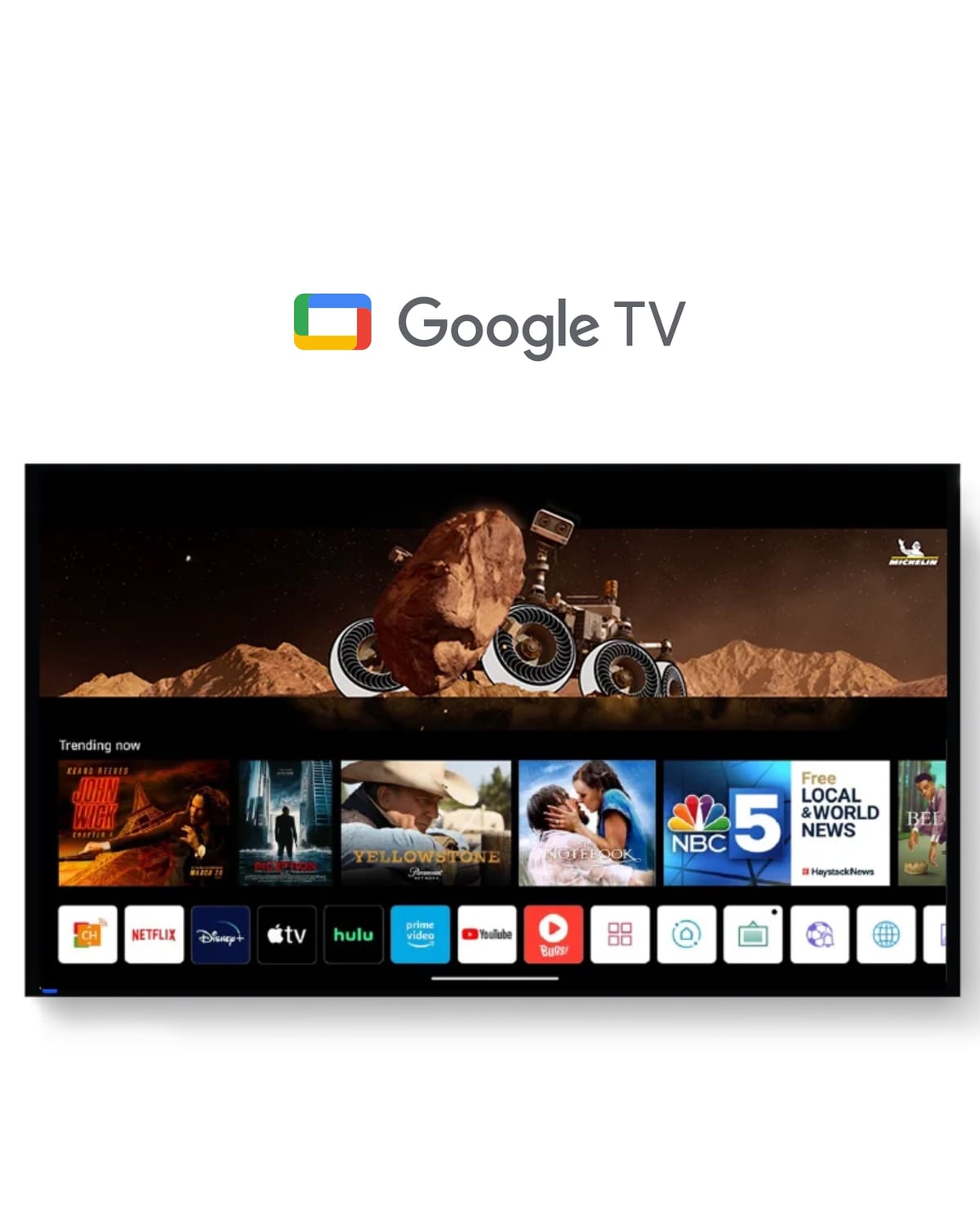
Teads this week announced a strategic partnership with Google TV that significantly expands its connected television HomeScreen advertising inventory across major global markets. The omnichannel outcomes platform has secured access to Google TV's Masthead placement, which appears as the first visual impression when users turn on or return to Google TV devices in the United States and United Kingdom.
The partnership positions Teads to capitalize on one of the most prominent placements in streaming television. Google TV brings together more than 400,000 movies and shows from across 10,000 applications, creating a high-attention moment when viewers first encounter their home screen. With personalized profiles and recommendations, the platform customizes each user's experience, making the HomeScreen placement particularly valuable for capturing attention during content discovery.
"Our partnership with Google TV is designed first and foremost to drive impact for our clients," said Simon Klein, SVP Commercial Strategy CTV at Teads. "Google TV offers exceptional reach and premium supply, and by pairing that with Teads' creative and omnichannel capabilities, we're able to bring brands a unique entry point that doesn't just reach viewers - it commands attention and delivers premium quality."
Teads' HomeScreen inventory now reaches more than 500 million unique devices globally following the Google TV partnership announcement. The company has executed over 4,000 CTV HomeScreen campaigns since launching the format in 2023, with premium brands including Cartier, Nestlé, and Air France utilizing the placement across global markets.
The Google TV partnership arrives as connected television's share of media budgets doubled from 14% in 2023 to 28% in 2025, with 72% of marketers planning to increase programmatic advertising investment. This growth trajectory has intensified competition for premium inventory as advertisers seek placements that combine scale with attention quality.
Teads pairs its media access with Teads Studio, the company's in-house creative team focused on optimizing storytelling across screens. The studio pioneered 3D creative formats on CTV HomeScreen placements, transforming standard video assets into dynamic, interactive experiences designed to boost attention and recall metrics.
The collaboration between Michelin, BETC creative agency, and Teads Studio exemplifies this approach. Michelin's "Motion for Life" campaign targeted automotive enthusiasts in France aged 25-65 years old, promoting components of sustainability and innovation that facilitate motion critical for life and human development. The campaign utilized contextual targeting and captivating 3D creatives across an omnichannel activation.
Using a variety of digital placements including CTV HomeScreen and InRead formats, the campaign reached audiences across multiple touchpoints. A study conducted with Lucid measured the effectiveness of key success factors including brand favorability, consideration, and perception of safe driving when advertised via omnichannel activation compared to single-channel approaches.
Strong synergies emerged across screens. Users exposed to both InRead and CTV formats demonstrated more positive impact than those exposed to only one ad type. This consistency of targeting across formats, paired with creative asset quality, yielded measurable results: favorability increased 7% for users exposed to both formats compared to 1% for single-channel exposure, consideration rose 6% versus 3%, and perception climbed 8% versus 3%.
"The results were strong, delivering +7 percent brand favorability, +8 percent perception of safety, and +6 percent brand consideration, proving that pairing high-quality creative with premium CTV environments delivers meaningful brand impact," according to the announcement.
The Michelin case demonstrates how BETC and Teads Studio conceptualized an out-of-the-box idea by leveraging the HomeScreen's high-impact canvas to build a 3D creative execution. The collaboration showcased the technical capabilities required to maximize premium placement effectiveness while maintaining brand storytelling integrity across different screen environments.
The CTV HomeScreen format has emerged as one of the fastest-growing advertising placements in connected television. Research conducted with MediaMento Institute revealed that Teads' CTV HomeScreen ads achieved a 48% attention rate, surpassing YouTube skippable pre-roll advertisements by 16 percentage points.
The study documented exceptional brand recall performance across multiple measurement categories. Unaided recall reached 50% among viewers exposed to HomeScreen advertisements, while aided recall peaked at 84%. Visual recognition averaged 55%, with top-performing executions achieving 73% recognition rates.
These attention metrics carry significant implications for campaign effectiveness. LG Ad Solutions reported that 97% of Smart TV users start their viewing journey on the home screen, visiting an average of three times per day. Viewers spend nearly 10 minutes browsing home screens before selecting content, creating a pre-content moment that has become prime advertising territory.
The format's effectiveness stems from catching users during high-intent moments. Research from LG Ad Solutions found that 71% of people who see a home screen ad say they're willing to learn more about the advertised brand, while more than half of LG TV users report paying attention to these placements.
Campaigns integrating multiple touchpoints show substantial performance gains. Research from LG Ad Solutions and MediaScience demonstrated that campaigns combining CTV video, home screen, and mobile video deliver 4.7 times higher awareness, 8.7 times stronger recall, and 11.2 times greater consideration than single-channel efforts.
Teads expanded its CTV capabilities through partnerships with major television manufacturers throughout 2024 and 2025. The company maintains exclusive rights to CTV native advertising inventory on LG Smart TVs across Germany, Austria, Switzerland, Australia, New Zealand, and 10 Asia Pacific countries including Indonesia, Vietnam, Philippines, Singapore, Malaysia, Thailand, Hong Kong, Japan, Taiwan, and India.
During the third quarter of 2025, Teads executed over 2,500 HomeScreen CTV campaigns, securing partnerships with TCL and Google TV during the period. The company's CTV revenue grew approximately 40% year-over-year during the third quarter on a pro forma basis, reaching a trajectory to achieve $100 million for the full year. Connected TV now represents about 6% of Teads' total advertising spend, with margins expanding year-over-year as the company scales its offerings.
The partnership with Google TV addresses a critical need in the CTV ecosystem. According to industry expert Vlad Chubakov, Associate Director of Programmatic at Delve Deeper, advertisers frequently mishandle connected television campaigns by applying display and video web strategies to fundamentally different streaming environments. The quality of inventory and creative adaptation proves essential for CTV effectiveness.
Google's broader CTV strategy has evolved to address competitive pressures. The company modified its platforms program policies to permit advertisers to use IP addresses for targeting, particularly in connected television environments, after industry observers noted this represented a strategic move to address Google's competitive disadvantages in the CTV space where competitors already utilized IP-based targeting.
The Google TV Masthead represents particularly valuable advertising inventory due to its high visibility and engagement potential. Google updated its format requirements throughout 2025 to permit certain categories of advertisements, reflecting the platform's growing importance in the digital advertising ecosystem.
Teads has invested significantly in measurement capabilities to address attribution challenges in CTV advertising. The company launched CTV Performance globally during the third quarter of 2025, introducing optimization and measurement capabilities that connect premium streaming exposure to deterministic downstream outcomes including site visits and conversions.
The measurement solution marks a shift from impression-based metrics to outcome-driven advertising on streaming platforms. CTV Performance enables advertisers to track site visits, leads, and sales directly tied to CTV exposure, moving beyond traditional metrics like impressions and completion rates to offer attribution capabilities previously unavailable in global markets outside the United States.
The system optimizes media delivery with impressions served only when cross-device measurement is possible through Teads' household graph. Enhanced impact focuses on viewers with the highest likelihood of taking action, identified through Teads' proprietary algorithm. High-impact creative formats built for the CTV environment include branded overlays and interactive features developed in collaboration with Teads Studio.
Measurement challenges persist across the CTV ecosystem despite these advances. Gracenote research released in October 2025 revealed that 32% of media executives consider their CTV advertising "not very effective," with lack of insight into whether ads reached intended audiences troubling 27% of respondents. Insufficient ROI visibility affected another 20%, while lack of transparency into where ads appear concerned 17%.
The HomeScreen format addresses several of these challenges through its prominent placement and attention-capturing characteristics. Unlike standard in-stream advertisements that compete for attention during content consumption, HomeScreen placements intercept viewers during an active decision-making moment when they're navigating to select what to watch.
Teads completed a $900 million merger with Outbrain in February 2025, creating one of the largest independent advertising platforms on the open internet. The combined entity operates as Teads Holding Co., trading under the TEAD ticker symbol on Nasdaq. The company reaches 2.2 billion consumers monthly across mobile and connected TV worldwide following the acquisition.
David Kostman, previously Outbrain CEO, serves as CEO for the combined entity. Jeremy Arditi and Bertrand Quesada, former Teads CEOs, serve as Co-Presidents and Chief Business Officers for the Americas and International markets respectively. The merged operation maintains direct partnerships with more than 10,000 publishers and 20,000 advertisers globally.
The company appointed Dani Cushion as Chief Marketing Officer effective January 6, 2026. Cushion joins from Innovid, where she served as CMO from December 2023 through July 2025, leading global marketing and communications efforts that positioned the CTV advertising technology company for its acquisition by Mediaocean.
According to CEO Kostman, Cushion will oversee marketing operations during what he characterized as "a pivotal moment of integration, innovation, and accelerated platform expansion." The appointment positions Cushion at the center of Teads' transformation following significant organizational changes in recent months.
The connected television landscape continues evolving rapidly. Substack launched TV apps for Apple TV and Google TVon January 22, 2026, expanding multimedia capabilities as platforms move toward living room consumption environments. Connected television's advertising market doubled its share of media budgets from 14% in 2023 to 28% in 2025, creating economic incentives for platforms to establish television distribution capabilities.
Standardization efforts are underway across the industry. IAB Tech Lab published standardized guidelines for six connected television ad formats on December 11, 2025, including pause ads, menu ads, squeezeback formats, overlay ads, in-scene insertions, and screensaver ads. The standards address fragmentation that has impeded programmatic adoption in connected television, where proprietary implementations created significant overhead for advertisers attempting to execute campaigns across multiple platforms.
Forward-looking statements in Teads' announcement contain substantial risks and uncertainties. The company noted risks including the possibility it may be unable to maintain or expand its strategic partnership with Google TV or other CTV partners, technical challenges related to integrating advertising demand with CTV operating systems, and the risk that advertisers may not adopt CTV HomeScreen formats at anticipated rates. The highly competitive nature of the CTV and streaming advertising market presents ongoing challenges.
The partnership between Teads and Google TV represents a significant development in the connected television advertising ecosystem. By combining Google TV's reach and premium supply with Teads' creative innovation and omnichannel capabilities, the collaboration provides brands with access to high-attention placements during critical discovery moments. As demonstrated by the Michelin campaign results, the effectiveness of HomeScreen advertising depends on the intersection of quality creative execution, premium inventory access, and strategic cross-channel orchestration.
The announcement arrives during a period of rapid transformation in how advertisers reach streaming audiences across different platforms. With connected television budgets continuing to grow and measurement capabilities becoming more sophisticated, premium placements like the Google TV Masthead represent valuable opportunities for brands seeking to capture attention in increasingly fragmented media environments. The success of campaigns utilizing these placements will depend on advertisers' ability to develop creative specifically optimized for the CTV environment while leveraging measurement tools that connect streaming exposure to business outcomes.
Who: Teads Holding Co., the omnichannel outcomes platform for the open internet, partnered with Google TV. The partnership affects advertisers seeking premium connected television inventory, including brands like Michelin, Cartier, Nestlé, and Air France that have utilized HomeScreen placements. Simon Klein, SVP Commercial Strategy CTV at Teads, announced the collaboration.
What: Teads secured access to Google TV Masthead placements appearing as the first visual impression on Google TV devices across major global markets including the United States and United Kingdom. The partnership expands Teads' HomeScreen inventory to reach over 500 million unique devices globally. The company has executed more than 4,000 CTV HomeScreen campaigns since launching the format in 2023, with the Michelin "Motion for Life" campaign demonstrating effectiveness through 7% brand favorability increase, 6% consideration improvement, and 8% perception enhancement when combining CTV HomeScreen with InRead formats compared to single-channel approaches.
When: Teads announced the partnership on February 5, 2026. The announcement follows the company's third-quarter 2025 execution of over 2,500 HomeScreen campaigns and arrival during a period when connected television's share of media budgets doubled from 14% in 2023 to 28% in 2025.
Where: The partnership provides access to Google TV devices across major global markets, with initial emphasis on the United States and United Kingdom. Teads' broader CTV footprint includes exclusive rights to HomeScreen inventory on LG Smart TVs across Germany, Austria, Switzerland, Australia, New Zealand, and 10 Asia Pacific countries. The company's HomeScreen inventory now reaches 500 million-plus unique devices globally across multiple television manufacturers and operating systems.
Why: The partnership addresses growing advertiser demand for premium connected television placements that combine scale with attention quality. With 72% of marketers planning to increase programmatic advertising investment and CTV budgets doubling, brands seek high-impact placements during content discovery moments. Research shows HomeScreen ads achieve 48% attention rates, outpacing YouTube by 16 percentage points, while campaigns combining CTV HomeScreen with other formats deliver 4.7 times higher awareness and 11.2 times greater consideration than single-channel efforts. The collaboration enables Teads to pair Google TV's reach and premium supply with creative innovation from Teads Studio, delivering what the company characterizes as meaningful brand impact through 3D creative executions optimized for the CTV environment.