Yahoo unleashes Scout to reclaim its place in AI search wars
Yahoo debuts Scout with Claude AI and Bing, leveraging 30 years of data to serve 250 million users across search, mail, news, and finance.


Yahoo debuts Scout with Claude AI and Bing, leveraging 30 years of data to serve 250 million users across search, mail, news, and finance.
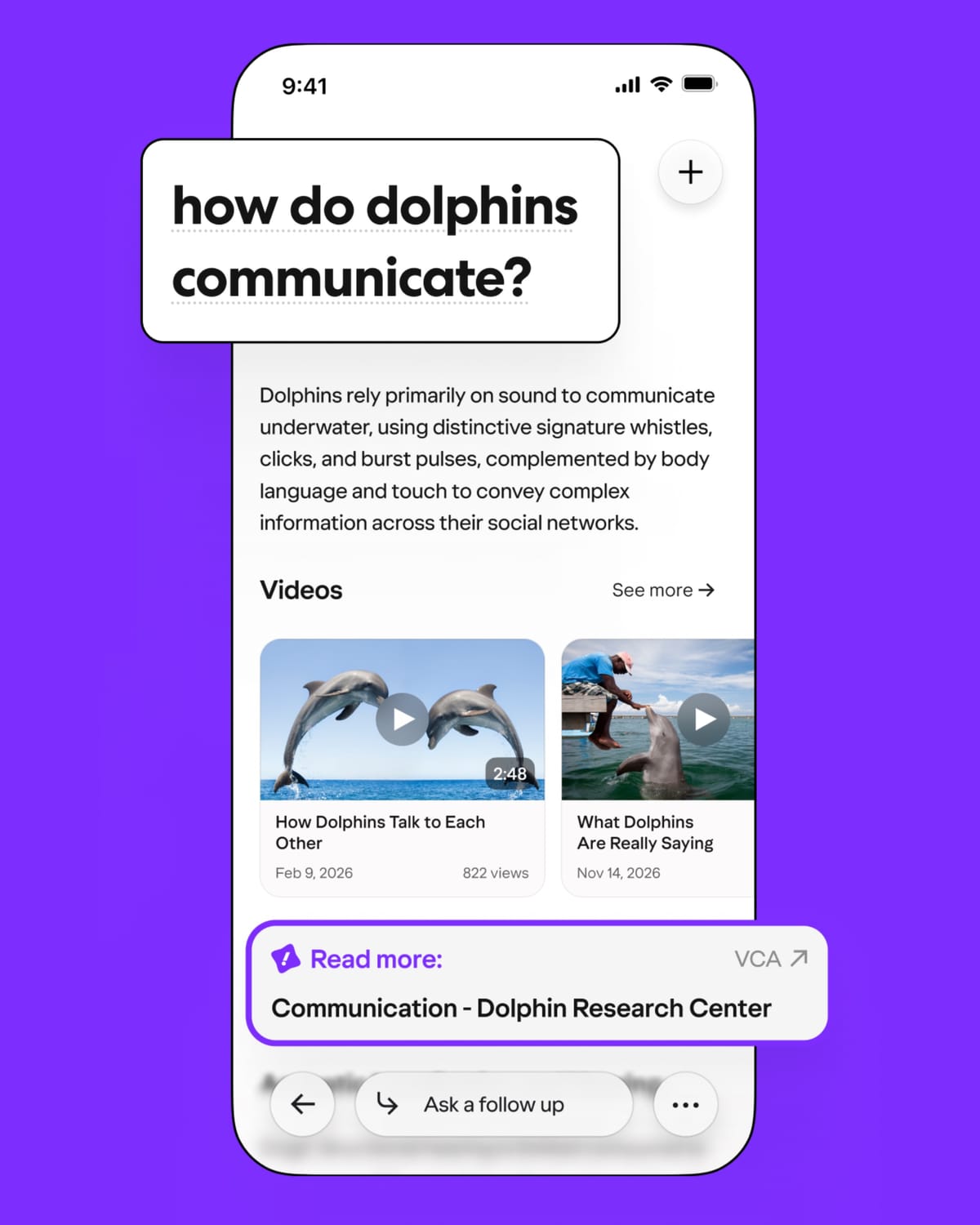
Yahoo today introduced Scout, a proprietary AI-powered answer engine built on three decades of search expertise and user data. The beta launch positions Yahoo to compete directly with emerging AI search platforms from Google, Microsoft, and startups that have reshaped how 250 million monthly U.S. users discover information online.
The answer engine synthesizes content from the open web, Yahoo's owned properties, and user insights accumulated since the company's 1996 founding. Scout appears across Yahoo Search and the company's entire portfolio of services, available on desktop and mobile platforms to nearly 90 percent of U.S. internet users each month.
Jim Lanzone, Yahoo's CEO, characterized the launch as the starting point for a broader transformation. "Search is fundamentally changing, and our team has been inspired to use our decades of experience and extremely rare assets to create something uniquely useful for Yahoo's hundreds of millions of monthly users," according to Lanzone.
The technical infrastructure draws on 500 million user profiles, a knowledge graph spanning more than 1 billion entities, and 18 trillion consumer events occurring annually across Yahoo's properties. These data sources enable Scout to deliver personalized answers and suggested actions tailored to individual users, according to the announcement.
Yahoo selected Anthropic's Claude as Scout's primary foundational AI model. The partnership announcement emphasized Claude's speed, clarity, judgment, and safety as essential qualities for consumer-facing answer engines where trust matters.
"When you're serving hundreds of millions of users, you need AI that can do more than retrieve information - it has to reason, synthesize, and explain," according to Ami Vora, Head of Product at Anthropic. "Yahoo is building toward a more personalized, trustworthy kind of search, and Claude's ability to deliver that quality of guidance at scale is at the heart of Yahoo Scout."
The Claude partnership represents a significant technical integration for Yahoo, which has steadily rebuilt its consumer technology infrastructure since its 2021 acquisition by private equity firm Apollo. Yahoo expanded AI features in its search interface exactly one week ago, introducing OpenAI-powered capabilities that required user authentication.
Today's Scout announcement supersedes those earlier AI experiments with a comprehensive platform spanning multiple Yahoo properties. The answer engine presents responses in formats including rich media, structured content in lists and tables, and transparent source citations designed to build user trust.
Scout builds on Yahoo's existing relationship with Microsoft by leveraging Bing's grounding API. The technical integration ensures Scout's answers draw from authoritative sources across the open web, combining Microsoft's search infrastructure with Yahoo's proprietary data ecosystem.
Yahoo also joined Microsoft's Publisher Content Marketplace pilot program, reflecting what the companies described as a shared commitment to expanding publisher reach and supporting sustainable revenue opportunities for content creators. Microsoft's search advertising revenue climbed 21% to $13.9 billion in fiscal year 2025, demonstrating the financial strength of its search partnerships.
The Microsoft relationship extends beyond search grounding to include Yahoo DSP's integration with Microsoft Advertising. Yahoo DSP announced agentic AI capabilities on January 6, enabling advertisers to automate campaign operations through natural language rather than requiring constant human oversight.
Scout powers a new Yahoo Scout Intelligence Platform launching across Mail, News, Finance, Sports, and other core services. The integration brings AI capabilities directly into applications people use daily rather than requiring separate interfaces.
Yahoo Mail receives AI summaries that extract key information from messages. Yahoo Sports introduces Game Breakdowns analyzing matchups and performance data. Yahoo News adds Key Takeaways highlighting essential information from articles. Comment Summaries on the Yahoo homepage capture conversation themes from user discussions.
Yahoo Shopping, powered by Scout, delivers product research that typically requires hours of manual comparison. The system distills insights from expert articles and user discussions across the web, providing product comparisons and shoppable links with clear reasoning for recommendations. Scout transforms what Yahoo characterized as "hours of research into seconds of decision-making."
Analysis by Yahoo Scout embeds within Yahoo Finance articles, providing real-time insights spanning company news, analyst ratings, financials, and earnings calls. The feature refreshes every 10 minutes with headlines and stock movement explanations designed to help investors make faster decisions.
More from Yahoo Scout appears directly within Finance articles, turning market news into interactive research experiences. Users can instantly explore deeper insights through AI-powered questions, uncovering key takeaways, stock performance context, and broader market implications without leaving the article.
Scout enters a market where AI answer engines have proliferated throughout 2025. Taboola announced DeeperDive on June 11, 2025, as an "industry-first Gen AI answer engine designed to live directly on publisher websites." The platform launched with Gannett and The Independent as partners.
Reddit launched AI-powered Answers on December 9, 2024, employing artificial intelligence to facilitate conversational searches across the platform's community discussions. The limited U.S. rollout initially served English-language queries.
HubSpot acquired XFunnel on October 31, 2025, a platform specializing in answer engine optimization. According to HubSpot's announcement, AI-driven leads convert three times better than traditional search leads, underscoring the growing importance of visibility within AI-powered search platforms.
The shift from traditional search to AI-generated answers has forced marketing professionals to develop new optimization strategies. Microsoft published a comprehensive playbook on January 6 addressing Answer Engine Optimization and Generative Engine Optimization, defining how retailers should structure product feeds and implement schema markup to ensure visibility across AI assistants.
Yahoo indicated that Scout will introduce "new, improved opportunities for search advertisers to effectively cross the chasm to generative AI search advertising" in the coming months. The statement suggests advertising formats specifically designed for AI-generated answer environments rather than traditional search result pages.
The advertising potential follows patterns emerging across AI search platforms. Google launched agentic checkout and AI shopping tools on November 13, 2025, enabling AI systems to complete purchases autonomously. Amazon deployed generative and agentic AI across its shopping platform, reporting 250 million Rufus users.
ChatGPT enhanced search with shopping detection on September 16, 2025, improving the platform's ability to identify when users seek product recommendations versus informational content. The update addressed commercial queries that previously required multiple attempts to generate relevant results.
For Yahoo, Scout's advertising integration will likely build on the company's existing relationships with brands and agencies developed through Yahoo DSP. Netflix added Yahoo DSP as its fourth global programmatic advertising partner on June 16, 2025, enabling advertisers to purchase Netflix inventory across 13 countries.
Scout represents the culmination of Yahoo's four-year effort to rebuild its consumer technology infrastructure following Apollo's acquisition. The company has concentrated on implementing improvements across mail, news, sports, and finance divisions before launching major marketing initiatives.
Yahoo returned to Super Bowl advertising in February 2025 after a 22-year hiatus, featuring Bill Murray in a campaign that generated approximately 150,000 email responses within two hours. The integrated campaign marked Yahoo's first major consumer-facing effort since 2002.
Current usage statistics demonstrate Yahoo's continued market presence despite intense competition from Google, Microsoft, and emerging AI platforms. The company reaches nearly 90 percent of the U.S. internet population monthly, according to Comscore data. This extensive reach provides Yahoo with unique advantages in training AI systems on actual user behavior patterns.
Eric Feng, Senior Vice President and General Manager of Yahoo Research Group, emphasized the company's data advantages. "Yahoo's deep knowledge base, 30 years in the making, allows us to deliver guidance that our users can trust and easily understand, and will become even more personalized over the coming months," according to Feng.
Yahoo outlined plans to expand Scout's capabilities throughout 2026. The answer engine will become more personalized based on individual user preferences and behavior patterns. New capabilities focused on deeper experiences within key verticals including finance, sports, shopping, and news will launch in coming months.
The personalization approach draws on Yahoo's 500 million user profiles and 18 trillion annual consumer events. These data sources enable Scout to understand how specific users search, discover, make decisions, and accomplish goals online, according to the announcement.
Scout differs from competitors by integrating answer engine capabilities across an entire portfolio of established products rather than launching as a standalone search interface. Yahoo Mail's 200 million authenticated U.S. users, Yahoo Finance's investor tools, and Yahoo Sports' coverage all receive Scout-powered intelligence features simultaneously.
The integrated approach positions Yahoo to capture user intent signals across multiple contexts - email, news consumption, financial research, sports engagement, and shopping behavior. This cross-property data collection enables more sophisticated personalization than platforms focusing exclusively on search queries.
Yahoo's decision to select Claude as Scout's primary model reflects strategic calculations about model capabilities, cost structures, and partnership terms. Anthropic's Claude has demonstrated strong performance in financial analysis, launched on July 15, 2025, targeting banks, insurance companies, asset managers, and fintech organizations.
The Claude partnership contrasts with Yahoo's previous experiments using OpenAI technology. Yahoo expanded AI features in search with OpenAI integration one week ago, implementing AI-powered chat features and AI-generated answers directly within search results. Today's Scout announcement supersedes those capabilities with Claude as the foundational model.
Microsoft's Bing grounding API provides the open web search infrastructure that supplements Yahoo's proprietary content. Microsoft ended Bing Search APIs on August 11, 2025, redirecting customers toward "Grounding with Bing Search" as part of Azure AI Agents. The recommended alternative costs 40-483% more than the retired APIs.
Yahoo's partnership with Microsoft for grounding services differs from direct API access, suggesting a negotiated arrangement that provides Yahoo with search infrastructure at scale. The Publisher Content Marketplace pilot program participation indicates revenue sharing arrangements between Yahoo, Microsoft, and content publishers whose materials appear in Scout's answers.
Scout launches into a search market dominated by Google, which controls approximately 90 percent of global search advertising revenue. Microsoft's Bing accounts for roughly 3 percent market share in the United States, limiting the scale of partners like Yahoo that depend on Microsoft's search infrastructure.
The AI search landscape has fragmented significantly since ChatGPT's November 2022 launch triggered mainstream AI awareness. Research revealed ChatGPT uses Google search despite official Bing partnership claims, with independent testing showing ChatGPT Plus consistently accessing Google's search index rather than Microsoft's Bing.
Yahoo must differentiate Scout through personalization capabilities, vertical integration across owned properties, and user trust built over 30 years of operation. The company's extensive reach - serving 250 million U.S. users monthly - provides scale that smaller AI search startups cannot match.
However, Yahoo faces technical challenges in maintaining answer quality, preventing hallucinations, and ensuring appropriate source attribution. Reddit's new AI search struggled with recent events when testing revealed the platform failed to locate current information about sporting events occurring days earlier.
The competitive landscape includes established platforms with deeper pockets and more advanced AI capabilities. Anthropic completed $13 billion Series F funding at a $183 billion valuation on September 2, 2025, demonstrating investor confidence in AI market potential. Yahoo's private equity ownership limits its ability to match these funding levels.
Yahoo's participation in Microsoft's Publisher Content Marketplace pilot reflects ongoing tensions between AI platforms and content creators. Publishers face significant traffic reduction from AI-powered search engines that provide answers directly rather than directing users to original sources.
The marketplace initiative aims to address these challenges by establishing compensation mechanisms for publishers whose content trains AI models or appears in generated answers. Yahoo's role as both a content producer through its news operations and an AI platform operator creates complex dynamics around content licensing and revenue sharing.
Taboola's DeeperDive addressed publisher concerns by keeping AI interactions within publisher websites rather than redirecting traffic elsewhere. The June 11, 2025 announcement positioned the technology as drawing from "years of proprietary, real-time, high-quality content created by journalists and editors across the open web."
Yahoo's approach differs by aggregating content from multiple sources including its own properties, Microsoft's Bing index, and potentially licensed content from marketplace participants. The specific economics of these arrangements remain undisclosed, though the pilot program designation suggests ongoing negotiations around sustainable publisher compensation models.
Scout's reliance on 500 million user profiles, 18 trillion annual consumer events, and extensive behavioral data raises questions about privacy protections and data governance. Yahoo has not disclosed specific details about data retention policies, anonymization practices, or user control mechanisms for Scout's personalization features.
The announcement emphasized that Scout is "uniquely shaped by Yahoo's three decades of user insights and deep understanding of how people search, discover, make decisions and accomplish goals online." This characterization suggests extensive behavioral tracking across Yahoo properties to train Scout's recommendation algorithms.
Yahoo ConnectID, the company's identity resolution solution, maintains relationships with over 205 million authenticated users in the U.S. Yahoo expanded identity solutions to CTV and publishers on October 17, 2024, implementing the technology across nearly 50,000 publisher domains with interoperability across more than 30 top data platforms.
The ConnectID infrastructure provides Yahoo with persistent user identification across web, mobile, and connected TV environments. Scout's personalization capabilities likely leverage this identity resolution to maintain consistent user profiles as people navigate between Yahoo properties and external websites.
Scout became available today in beta for U.S. users at Scout.Yahoo.com and in the Yahoo Search app on iOS and Android. The company has not specified a timeline for removing the beta designation or expanding availability beyond the United States.
The beta designation acknowledges that answer quality, personalization effectiveness, and user experience require refinement based on real-world usage patterns. Yahoo indicated plans to evolve Scout in the months ahead, expanding to power new products across the company's portfolio.
Users can access Scout through multiple entry points: the dedicated Scout.Yahoo.com website, the Yahoo Search mobile application, and integrated features within Yahoo Mail, News, Finance, and Sports. This multi-surface approach contrasts with competitors that launched AI search as standalone products requiring users to adopt new interfaces.
Yahoo encouraged feedback through its standard support channels, which will inform feature development and product roadmap decisions. The company has not disclosed specific metrics it will use to evaluate Scout's success or determine when to transition from beta to general availability.
Who: Yahoo Inc., led by CEO Jim Lanzone and Yahoo Research Group's Eric Feng, partnered with Anthropic (providing Claude AI model) and Microsoft (providing Bing grounding API) to serve 250 million monthly U.S. users.
What: Yahoo launched Scout, a proprietary AI-powered answer engine built on 30 years of search history, 500 million user profiles, a knowledge graph spanning 1 billion entities, and 18 trillion annual consumer events. Scout synthesizes information from the open web, Yahoo data, and Yahoo content to provide personalized answers across Yahoo Search and the company's entire portfolio including Mail, News, Finance, and Sports.
When: Yahoo announced Scout today, January 27, 2026, with beta availability immediately for all U.S. users on desktop and mobile platforms. The launch coincides with Yahoo approaching its 30th anniversary in March 2026.
Where: Scout operates at Scout.Yahoo.com, within the Yahoo Search app on iOS and Android, and as the Yahoo Scout Intelligence Platform integrated across Yahoo Mail, News, Finance, Sports, and other core Yahoo properties serving nearly 90 percent of U.S. internet users monthly.
Why: Yahoo aims to compete in the AI search market by leveraging unique assets including three decades of user insights, extensive first-party data, and integration across owned properties. The answer engine addresses fundamental changes in how people search and discover information, shifting from keyword queries to natural language conversations. Scout provides Yahoo with new opportunities for search advertising in generative AI environments while differentiating the company's offerings through personalization capabilities that smaller AI search startups cannot match.