JCDecaux wins Denver airport ad contract, eyes 100 million passengers
JCDecaux North America wins a 10-year advertising contract at Denver International Airport, the world's 10th busiest hub, pending Denver City Council approval.


JCDecaux North America wins a 10-year advertising contract at Denver International Airport, the world's 10th busiest hub, pending Denver City Council approval.
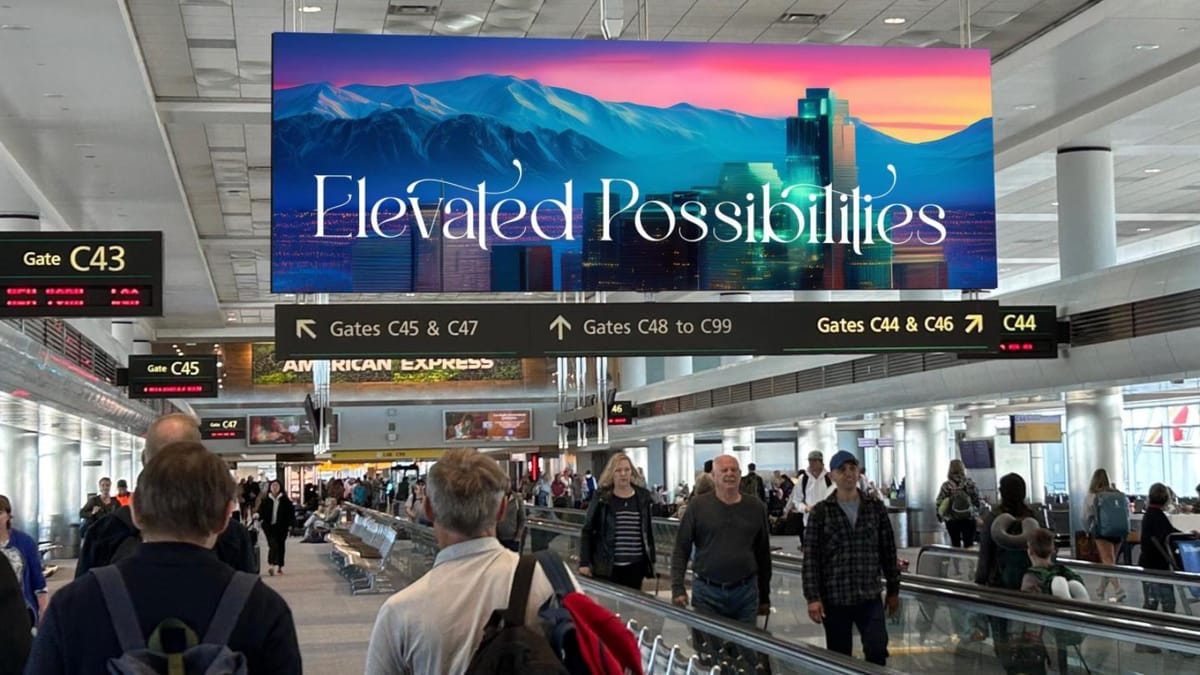
JCDecaux North America yesterday secured a 10-year advertising contract at Denver International Airport (DEN), adding one of North America's most ambitious passenger growth stories to a global airport portfolio that already spans 14 of the world's 25 largest hubs. The contract, announced March 3, 2026, still requires approval from Denver City Council. If approved, the agreement is scheduled to become effective in May 2026.
The award follows a competitive bid process. Denver International currently serves over 82 million passengers annually and was ranked the tenth busiest airport in the world by passenger traffic in 2025, according to the announcement. The airport is pursuing an internal "Vision 100" plan that targets capacity for 100 million passengers annually within the next several years - a figure that would place it among the very largest aviation hubs on the planet.
For brands and media buyers tracking the expansion of digital out-of-home inventory at premium transit locations, the contract represents a significant addition to JCDecaux's North American presence. The company operates 1,091,811 advertising panels worldwide, present in 3,894 cities with more than 10,000 inhabitants, and reaches a daily audience of 850 million people in more than 80 countries, according to company figures.
JCDecaux's plan for Denver centres on a state-of-the-art digital program integrated within the recently redeveloped Great Hall and extended across all concourses. The program will provide advertisers with dynamic, flexible, and targeted opportunities while generating non-aeronautical revenue for the airport. The Great Hall, DEN's central atrium connecting its main terminal to the concourse train system, is among the highest-footfall areas of the building and has been the subject of a substantial redevelopment effort in recent years.
The contract does not specify the number of individual screens or the investment amount, consistent with the confidentiality typical of long-term outdoor advertising concessions. What the announcement does make clear is the emphasis on high-impact display formats and cutting-edge technology - language that aligns with JCDecaux's broader infrastructure approach at other major international airports in its portfolio.
Jean-François Decaux, Chairman of the Executive Board and Co-Chief Executive Officer of JCDecaux, said: "We are incredibly proud to partner with Denver International Airport, a true symbol of modern aviation and growth. This significant win reinforces JCDecaux's market leadership in the global airport sector, where JCDecaux now operates the advertising contract in 14 of the world's 25 largest airports, delivering 54% of the audience."
That 54% audience figure is notable. Holding the advertising rights to just over half the audience across the world's 25 busiest airports gives JCDecaux substantial leverage in conversations with global brands planning multi-market airport campaigns, particularly those operating through programmatic channels.
Denver International is not merely large - it occupies a distinctive position within the US aviation network. As a major hub known for its international route development, DEN connects a wide geographic catchment area to both domestic and transatlantic destinations. The airport's passenger base spans business travellers, leisure visitors, and connecting transit passengers, a demographic mix that historically commands premium CPMs in out-of-home advertising.
The Vision 100 plan adds a forward-looking dimension. An airport planning to serve 100 million annual passengers is, effectively, investing in an advertising audience that does not yet fully exist. JCDecaux's ten-year contract would allow the company to build and operate infrastructure designed for that expanded footprint from the outset, rather than retrofitting an incumbent installation. This mirrors the approach JCDecaux has applied elsewhere - building for tomorrow's passenger volumes while monetising today's.
North America has been one of JCDecaux's stronger-performing regions in recent quarters. The company's Q3 2025 results showed North America growing double digits even as France declined due to the Olympic comparison effect. Full-year 2024 results, released in March 2025, showed group revenue reaching €3,935.3 million with organic growth of 9.7%, and programmatic advertising revenues growing 45.6% to €145.9 million - now accounting for 9.5% of digital revenue.
The Denver contract arrives during a period of accelerating programmatic DOOH adoption across JCDecaux's global network. The company's VIOOH supply-side platform connects to 46 demand-side platforms across 24 countries, facilitating automated buying processes that align with digital advertising workflows already familiar to performance marketers.
JCDecaux launched a global programmatic DOOH airport advertising offer in February 2024, providing access to over 70 million monthly passengers and 2 billion impressions across more than 3,000 screens in major airports worldwide. That initial offering covered airports including Dallas-Fort Worth, Los Angeles, Miami, London Heathrow, Paris-Charles de Gaulle, Frankfurt, and Singapore, among others. Denver was not part of that first wave.
The addition of DEN, once the contract becomes operational, would extend programmatic airport coverage into one of the top-ten busiest airports globally - a material expansion for buyers running North American multi-city campaigns. JCDecaux's February 2025 deployment at Dubai International Airport - which involved 378 premium digital screens across departures, arrivals, boarding gates, baggage reclaim areas, and VIP lounges in Terminals 1 and 3 - offers a technical reference point for the kind of infrastructure JCDecaux now builds at major international hubs.
The system architecture at Dubai integrates dynamic purchasing capabilities with real-time campaign adjustments, supporting targeting across multiple passenger journey touchpoints. Whether Denver's implementation will mirror that model has not been confirmed. But the description of "dynamic, flexible, and targeted opportunities" in the announcement suggests a similar programmatic-ready infrastructure is planned.
The Denver announcement fits a clear operational pattern. JCDecaux has spent the past two years accumulating long-term contracts across transport infrastructure on multiple continents. The company secured the Brussels Airport advertising concession in July 2025, beginning January 2026, for an airport that processed 23.6 million passengers in 2024. An exclusive advertising contract at Shenzhen Bao'an International Airport in China was awarded in early 2024, effective February 1 of that year, extending the company's presence in the Guangdong-Hong Kong-Macao Greater Bay Area. JCDecaux Peru renewed and extended its concession at Lima's Jorge Chávez International Airport in late 2023 through a 10-year contract covering the new terminal.
Each of these deals follows the same structural logic: long-term exclusivity, investment in new digital infrastructure, and the integration of programmatic capabilities that connect traditional airport advertising to the automated buying systems used across other digital channels. Denver follows this template.
The company's transport advertising division spans 157 airports globally alongside 257 contracts in metros, buses, trains, and tramways, encompassing 340,848 advertising panels. The division's organic growth reached 13.1% in 2024, reflecting strong performance across railway, airport, and metro contracts. H1 2025 group revenue reached €1,868.3 million, according to company figures.
Denver chose JCDecaux through a comprehensive competitive bid process, the announcement states. The contract will be formally considered by Denver City Council - a standard municipal approval requirement for major commercial agreements affecting city-owned infrastructure. Denver International Airport is owned and operated by the City and County of Denver, meaning the advertising concession is effectively a public contract subject to civic oversight.
City Council approval adds a layer of procedural uncertainty not present in privately operated airport deals. Should the council reject or substantially modify the agreement, the timeline would shift. The company has flagged May 2026 as the expected effective date contingent on that approval, a span of roughly two months from announcement - suggesting a relatively streamlined approval process is anticipated.
Airport advertising occupies a specific role in media planning. Passengers represent a captive, generally higher-income audience with documented dwell times running from 45 minutes to several hours. The format enables brand exposure at a moment when consumers are disengaged from their regular environment - a condition associated with higher advertising recall in studies of out-of-home effectiveness. Out-of-home advertising has been shown to achieve a marginal ROI of $7.58 per incremental dollar invested, outperforming average media types despite accounting for less than 1% of total media spending, according to research from October 2025.
Denver's specific audience profile strengthens the commercial case. The airport serves a catchment that includes Colorado's technology and energy sectors, a significant military and federal government presence, and growing international connectivity. The Vision 100 growth target signals passenger volume increases that would expand reach for any advertiser running campaigns within the terminal.
JCDecaux's emphasis on the Great Hall is particularly relevant for brand advertising. The recently redeveloped space features high ceilings and extended sightlines suited to large-format digital displays - the kind of premium inventory that commands the highest rates and attracts the largest brand budgets. Integrating high-impact display formats in that environment, connected to programmatic buying infrastructure, positions DEN as a premium programmatic airport node in the North American market.
The broader programmatic DOOH market continues its expansion. VIOOH partnered with Vengo in August 2025 to bring 65,000 US screens and 13 billion monthly impressions to programmatic buyers, representing 9% of the US digital out-of-home market. Place Exchange launched Programmatic Guaranteed for DOOH within Google's Display & Video 360 in December 2025, enabling brands to plan, buy, and measure guaranteed DOOH campaigns alongside their other digital media. A major airport contract that feeds into this infrastructure adds meaningful inventory to an ecosystem still building critical mass in the United States.
JCDecaux SE is listed on the Euronext Paris exchange and is part of the SBF 120 and CAC Mid 60 indexes. The company reported 2024 revenue of €3,935.3 million. It holds the number one position in worldwide street furniture with 629,737 advertising panels, transport advertising with 157 airports and 257 contracts in metros, buses, trains, and tramways, European billboards, and outdoor advertising in Europe, Asia-Pacific, Latin America, and Africa. The company ranks second in outdoor advertising in the Middle East.
JCDecaux's carbon reduction trajectory has been approved by the Science Based Targets initiative (SBTi), and the company has joined the Euronext Paris CAC® SBT 1.5° index. It is recognised for its sustainability performance in CDP (A rating), MSCI (AAA), Sustainalytics (11.9), and has achieved Gold Medal status from EcoVadis - a set of credentials increasingly relevant to brands incorporating environmental considerations into media partner selection criteria.
Who: JCDecaux SE (Euronext Paris: DEC), the world's largest outdoor advertising company, through its subsidiary JCDecaux North America. The contract counterpart is Denver International Airport (DEN), owned and operated by the City and County of Denver. Denver City Council holds approval authority.
What: A 10-year exclusive advertising contract covering Denver International Airport, involving significant investment in digital technology and high-impact display formats, focused on the recently redeveloped Great Hall and all airport concourses. The contract will provide advertisers with dynamic, targeted opportunities and generate non-aeronautical revenue for DEN.
When: The announcement was made on March 3, 2026. The contract is scheduled to become effective in May 2026, subject to Denver City Council approval.
Where: Denver International Airport, Colorado, United States. DEN serves as a major US hub and ranks as the tenth busiest airport in the world by passenger traffic in 2025, handling over 82 million annual passengers.
Why: The contract extends JCDecaux's airport advertising footprint to 14 of the world's 25 largest airports - covering 54% of the combined audience - at a moment when programmatic DOOH adoption is accelerating globally and airport advertising is undergoing a technology-driven transformation. For the advertising community, Denver's ambitious Vision 100 passenger growth plan, combined with JCDecaux's established programmatic infrastructure, positions DEN as a significant future node in North American digital out-of-home media planning.