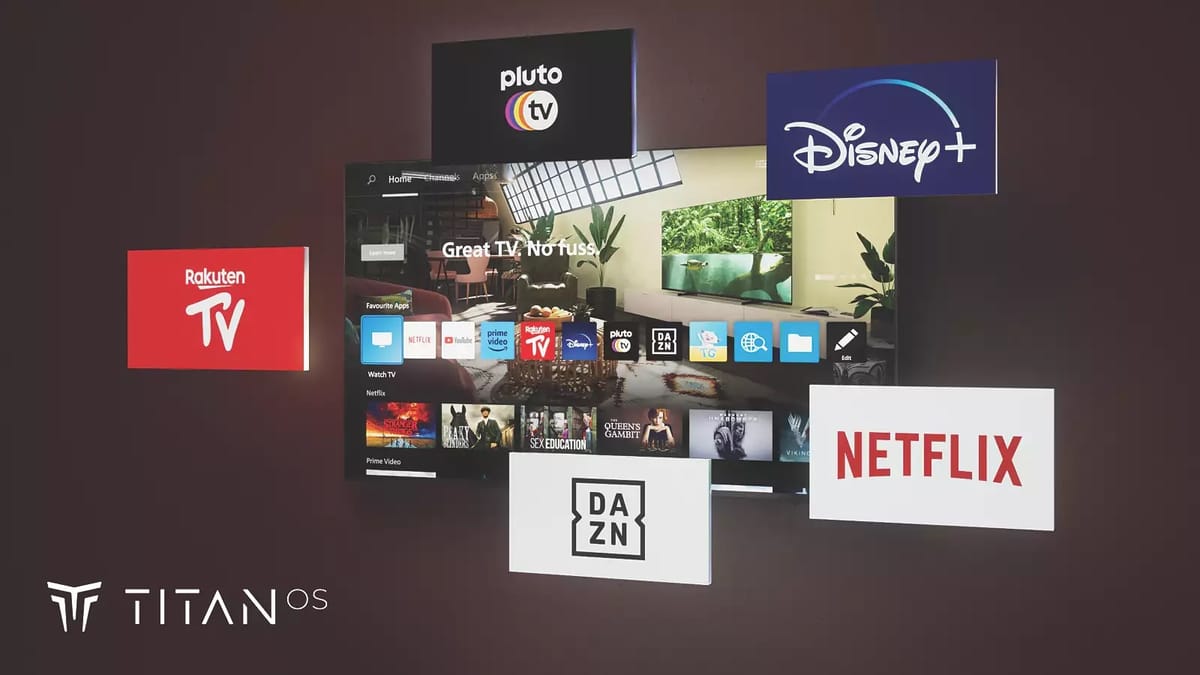
Philips this week announced it is dropping Google TV from its entire 2026 television lineup, switching to Titan OS across all models - a structural shift that removes one of Europe's best-known TV brands from Google's connected TV advertising ecosystem and hands a significant inventory bloc to a Barcelona-based operating system that launched commercially only in January 2024.
According to 9to5Google, citing reporting by FlatPanelsHD, Philips is replacing Google TV on "all models" of its 2026 range with Titan OS, a Linux-based smart TV operating system with roots in the European Union. The decision marks the end of a multi-year relationship between Philips and Google TV, and it carries consequences that extend well beyond which remote control buttons work on a Philips set.
The technical architecture behind the switch
Titan OS differs from Google TV, Apple TV, and Roku at a fundamental architectural level. Rather than running native applications installed on the device, it uses web-based apps - a design choice that means users do not download software to local storage. According to Philips, the practical effect is that viewers simply add apps to a homescreen without triggering a download process. This approach potentially reduces hardware requirements for the television's onboard processor and memory, which according to 9to5Google was one of the arguments Philips gave for making the change.
According to the company's own documentation published November 10, 2025, Titan OS provides security updates for a full 10 years per device. The platform covers major streaming services including Netflix, YouTube, Disney+, and Amazon Prime Video. It also supports Apple AirPlay and casting from mobile devices. What it does not support, as of the 2026 lineup announcement, is Google Cast - a feature Philips users had access to while running Google TV. Spotify is also absent from the current app offering, along with Apple TV as a standalone application.
Who is Titan OS, and where did it come from?
According to the company's own about page, Titan OS S.L. is headquartered in Barcelona, with branches in Amsterdam and Taipei. Its leadership team includes Jacinto Roca as CEO, Tim Edwards as Chief Operating Officer, Daan Van Baars as Chief Product Officer, and Jim Collins as Chief Revenue Officer. The company describes itself as focused on changing how people discover content and how brands connect with audiences on connected TV.
Titan OS launched formally on January 22, 2024, positioning itself as an alternative in a smart TV market where, according to GFK data from 2022, approximately 40% of television sets lack their own operating system. Its founding team brought experience from companies including Disney, Roku, Rakuten TV, and KKR. Its initial strategic partnership was with TP Vision, the company that manufactures Philips and AOC-branded televisions, which enabled Titan OS to launch on Philips and AOC TVs across Europe and Latin America from day one.
The Wikipedia list of smart TV platforms confirms Titan OS is managed by Titan Operating System, S.L. and currently listed as used by Philips (TP Vision) - reflecting the arrangement that now becomes the exclusive relationship for the 2026 model year.
Why Philips made the switch - and what ad revenue has to do with it
According to 9to5Google, two factors drove the decision beyond the technical lower hardware requirements. First, Philips apparently has direct input on Titan OS design and features - a degree of control not available under Google's more structured platform. Second, and perhaps more commercially significant, Philips is reportedly receiving a larger share of advertising revenue generated through Titan OS compared to what it received under Google TV.
That financial dynamic matters in context. Titan OS operates its own advertising marketplace, Titan Ads, which launched in June 2024. The platform reaches over 30 million streaming households across Europe through partnerships with TV manufacturers, content providers, and telecom companies. Its ad formats include homepage ads - large banner placements on the smart TV homescreen - and in-stream video ads that appear during content on FAST channels including CNN, FIFA+, Euronews, Bloomberg, and Sony One.
The revenue-sharing model on connected TV operating systems has long been a point of tension between TV manufacturers and platform providers. Platforms like Roku and Google TV retain portions of ad inventory and subscription revenue processed through their systems. Titan OS's proposition to manufacturers like Philips appears to include more favorable terms, giving the hardware partner a bigger cut while Titan OS builds its European CTV inventory base.
A heavy focus on FAST content
According to 9to5Google, Titan OS places significant emphasis on FAST - free and ad-supported streaming television - content. This orientation aligns directly with the platform's advertising business model. FAST channels generate revenue through advertising rather than subscriptions, which means that every hour of FAST viewing on a Titan OS television produces ad inventory that flows through Titan Ads.
Titan OS has been aggressive in building its FAST content catalog. In September 2025, it announced a partnership with BBC Studios to launch five channels - BBC Food, BBC Travel, BBC History, Top Gear, and BBC Drama - across European markets including Germany, Austria, Switzerland, France, Spain, Italy, Benelux, and Nordic countries. That came after earlier partnerships with CNN for FAST channels, Sony Pictures Entertainment, FIFA+, and Euronews.
ODMedia also launched FAST channels on Titan OS in July 2025, expanding the platform's reach in the Netherlands. The FAST model has gained traction as viewing habits shift toward streaming, with user growth in free ad-supported services outpacing subscription video-on-demand by 3:1 ratios according to industry data cited by PPC Land.
Titan OS and the European CTV advertising ecosystem
The Philips 2026 lineup decision arrives as the broader European CTV advertising market undergoes rapid expansion. Connected TV's share of media budgets has been projected to double from 14% in 2023 to 28% in 2025, according to data cited across multiple PPC Land reports. For Titan OS, having all Philips 2026 models running its operating system - rather than a portion of the lineup - substantially increases the scale of first-party viewing data and ad inventory available to its Titan Ads marketplace.
Equativ and Titan OS announced a partnership in March 2025 to enhance CTV advertising with retail media data, aiming to reach 30 million European households with advanced targeting capabilities. That integration combines Titan's first-party viewing data with retail purchase data from partners including Currys in the UK and Boulanger in France, enabling audience segments based on both content consumption and buying behavior.
Viaplay secured a dedicated hardware hotkey on all 2025 Philips TVs powered by Titan OS following a deal announced July 1, 2025. That integration covered the Nordics and the Netherlands. The Philips 2026 full migration to Titan OS means similar deals will apply to a wider device base from the outset.
TV 2 Play in Norway extended its streaming reach through a Titan OS partnership announced December 30, 2024, and Movistar Plus+ launched on Titan OS for Spanish Philips TV users in July 2025. These partnerships suggest Titan OS's content strategy is built around regional licensing rather than global uniform rollouts - a localization approach that mirrors how European broadcasting rights traditionally work.
What user feedback has shown so far
Philips has been running Titan OS on select television models for roughly two years before this full-lineup commitment. According to 9to5Google, user feedback during that period "has not been particularly positive." A Reddit thread in the r/PhilipsTV community corroborates that assessment extensively. Multiple users described the OS as feeling like "an early alpha stage," citing crashes, limited app selection, an absence of parental control customization, and no app store in the traditional sense.
One commenter who purchased a Philips PML9008 described having "almost zero customisation options" and noted that apps including YouTube and Netflix cannot be uninstalled. Others pointed to the absence of Spotify, Apple TV+, and Kodi as significant gaps. The lack of a proper app store - Philips subsequently launched what it calls the Philips App Gallery - featured prominently in negative assessments. One user noted that the OS "completely lacks fundamental things for customisation," contrasting it with Android TV's flexibility.
On the positive side, some users praised the OS's speed. One commenter who owned the PML9008 since December 2023 described receiving updates every one to two months that added apps and new settings, and said the experience was satisfactory. AirPlay-based casting of services like Paramount+ through the built-in Casting app was cited as a viable workaround for missing applications.
The Reddit thread also shed light on a broader structural point: several users said the original Philips company no longer manufactures televisions, with that business now operated by TP Vision - a detail relevant to understanding why the platform's OS decisions are now made in conjunction with a third party like Titan OS rather than directly by Philips engineers.
What this means for advertisers and marketers
For the marketing and advertising technology community, the Philips 2026 lineup decision has several direct implications. Google TV's removal from a major European TV brand reduces the inventory available through Google's CTV advertising stack - including Display & Video 360 - in markets where Philips commands significant share, particularly the UK and across Europe.
The Trade Desk was reportedly developing its own smart TV OS as of August 2024, with sources indicating the company was pitching manufacturers on more favorable revenue-sharing terms than established platforms. The Philips decision suggests that argument is resonating in the market - not just with The Trade Desk, but with independent European platforms like Titan OS that can offer manufacturers greater control and revenue participation.
Teads secured a partnership with Google TV in early 2026, expanding its CTV reach to over 500 million devices globally. The fragmentation of the European smart TV OS landscape - with Philips now on Titan OS rather than Google TV - means that reaching European audiences at scale through CTV increasingly requires relationships with multiple platform providers rather than a single aggregated buy.
Google introduced new requirements for CTV inventory monetized through Google-served ads in March 2025, effective May 1, 2025. With Philips 2026 models no longer running Google TV, that inventory falls outside those requirements entirely - it routes instead through Titan Ads and Titan OS's own consent management platform, built on OneTrust technology.
The home screen advertising format deserves particular attention in this context. LG Ad Solutions reported 60% growth in home screen advertising placements in late 2025, with research showing that 97% of smart TV users start their viewing journey on the home screen and visit it an average of three times per day. Titan Ads' homepage ad format - large banner placements on the Titan OS home screen - positions the platform to capture that pre-content engagement moment across all 2026 Philips devices.
For advertisers who have been building European CTV strategies through Google TV inventory, the Philips migration creates a gap that will need to be filled through direct relationships with Titan Ads or through demand-side platforms that have established supply-side connections to Titan OS inventory.
Timeline
- January 22, 2024 - Titan OS formally launches as an independent smart TV operating system, with TP Vision (Philips, AOC) as its first hardware partner
- June 19, 2024 - Titan OS announces Titan Ads, its CTV advertising marketplace targeting over 30 million European households
- August 30, 2024 - The Trade Desk reportedly begins pitching a rival smart TV OS to manufacturers, signaling pressure on established platforms
- December 30, 2024 - TV 2 Play in Norway partners with Titan OS for distribution on Philips Smart TVs
- March 9, 2025 - Equativ and Titan OS partner to bring retail media data to CTV targeting across 30 million European households
- March 16, 2025 - Google introduces new CTV inventory requirements for Google-served ads, effective May 1, 2025
- July 1, 2025 - Viaplay secures dedicated hotkey on all 2025 Philips TVs via Titan OS
- July 5, 2025 - ODMedia launches FAST channels on Titan OS for Dutch audiences
- July 15, 2025 - Movistar Plus+ launches on Titan OS across Philips Smart TVs in Spain
- September 2, 2025 - Titan OS partners with BBC Studios for five FAST channels across eight European markets
- November 10, 2025 - Philips publishes documentation explaining Titan OS for consumers, including a 10-year security update commitment for compatible devices
- February 7, 2026 - Teads secures Google TV partnership, expanding CTV HomeScreen reach to over 500 million devices globally
- March 23, 2026 - Philips announces its entire 2026 television lineup will run Titan OS exclusively, dropping Google TV across all models
Summary
Who: Philips (manufactured by TP Vision) and Titan OS S.L., a Barcelona-headquartered smart TV software company with offices in Amsterdam and Taipei, led by CEO Jacinto Roca.
What: Philips is switching its entire 2026 television lineup from Google TV to Titan OS - a Linux-based, web-app-driven smart TV operating system - across all models. The transition removes Google Cast support from new Philips TVs and changes the advertising revenue flow away from Google's CTV ecosystem toward Titan Ads, Titan OS's proprietary advertising marketplace. AirPlay support is retained. Some notable apps including Spotify and Apple TV remain absent.
When: The announcement was reported on March 23, 2026. Philips had been running Titan OS on select models for approximately two years before committing to the full lineup migration.
Where: The change affects Philips television models sold primarily in the UK and Europe, the markets where Philips holds the most significant share. Titan OS operates across European and Latin American markets through its TP Vision partnership, with advertising infrastructure targeting over 30 million European streaming households.
Why: According to reporting, Philips made the switch for a combination of reasons: lower system hardware requirements under Titan OS's web-app architecture, greater input over OS design and features, and a more favorable share of the advertising revenue generated on its devices compared to the arrangement under Google TV. The decision reflects a broader pattern in the smart TV industry in which hardware manufacturers are seeking greater control over the software stack and a larger portion of the recurring advertising revenue that their devices generate.
Share this article
The link has been copied!